top of page


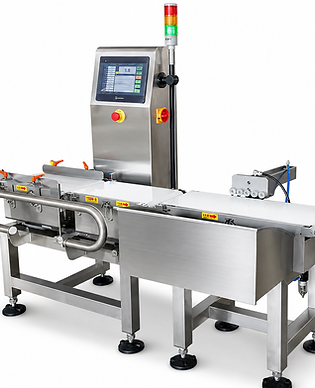
Check Weigher System
Accurate Weight Control for Modern Production Line
What Is a Check Weigher?
A Check Weigher (or Checkweigher) is an automated inspection system designed to measure the weight of products as they move along a conveyor belt. It verifies whether each item falls within predefined weight limits and automatically accepts or rejects products that do not meet specifications.
Check weighers are typically installed after the filling or packaging process, ensuring every product leaving the production line complies with quality standards, regulatory requirements, and customer expectations.
How a Check Weigher Works
Unlike static scales, a check weigher performs dynamic (in-motion) weighing, allowing products to be inspected without stopping the conveyor.
Typical Working Process
-
Infeed Conveyor
Products enter the system in a stable, evenly spaced manner. -
Weighing Section
High-precision load cells measure the product weight while it is moving. -
Data Processing & Comparison
The system compares the measured weight with preset limits (underweight, acceptable, overweight). -
Reject Mechanism
Products outside tolerance are automatically removed using air blast, pusher, drop-flap, or diverter systems. -
Data Recording & Reporting
Weight data can be stored for quality control, audits, and production analysis.
Key Benefits of Using a Check Weigher
✔ Accurate Weight Control
Ensures every product meets declared weight requirements, preventing under- or over-filling.
✔ Compliance with Regulations
Supports compliance with food, pharmaceutical, and consumer product regulations.
✔ Reduced Product Giveaway
Minimizes overfilling, helping manufacturers reduce raw material waste and production costs.
✔ Improved Production Efficiency
Fully automated operation enables high-speed inspection without slowing down production lines.
✔ Quality Assurance & Traceability
Stores statistical data for quality audits, batch reports, and continuous improvement programs.
Types of Check Weighers
1. Dynamic Check Weigher (In-Motion)
-
Designed for high-speed, continuous production lines
-
Commonly used in food, beverage, pharmaceutical, and FMCG industries
2. Static Check Weigher
-
Products are weighed individually while stationary
-
Suitable for low-volume or manual inspection applications
Applications Across Industries
Check weighers are widely used in:
-
Food & Beverage – snacks, frozen foods, ready meals, dairy products
-
Pharmaceuticals – tablets, blister packs, medical devices
-
Cosmetics & Personal Care – creams, lotions, bottles
-
Consumer Goods (FMCG) – household and packaged products
-
Logistics & Packaging Lines – final weight verification before shipment
Why Check Weighers Are Essential in Modern Manufacturing
In today’s competitive manufacturing environment, weight accuracy directly impacts product quality, brand reputation, and profitability. A check weigher is not just a weighing device—it is a critical quality control tool that helps manufacturers:
-
Maintain consistent product standards
-
Avoid regulatory penalties
-
Reduce production losses
-
Improve customer satisfaction
Conclusion
A Check Weigher System is an indispensable solution for manufacturers who demand precision, efficiency, and reliability in their production processes. By ensuring every product meets weight specifications, check weighers play a vital role in quality assurance, cost control, and regulatory compliance across multiple industries.



bottom of page